
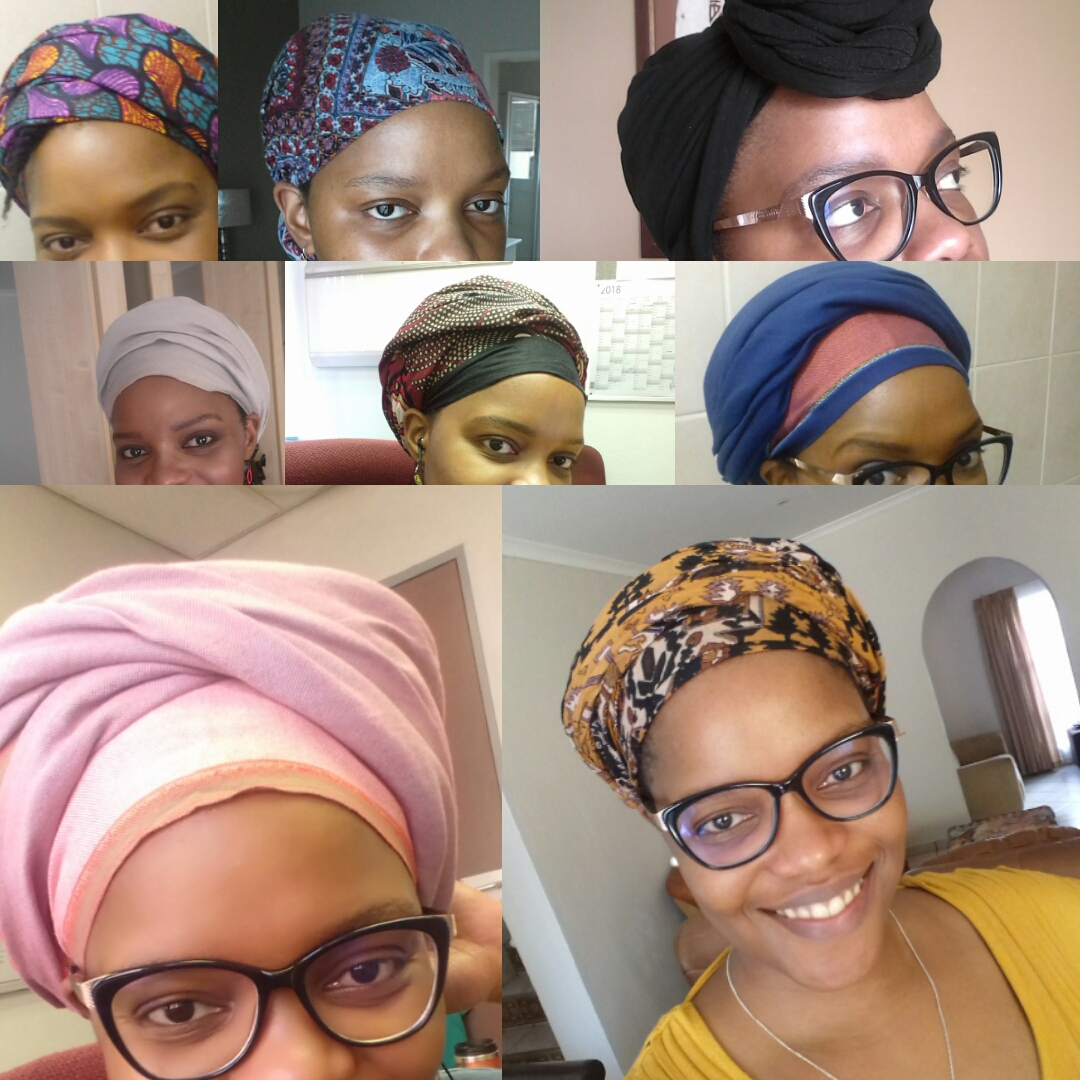
We hold this truth to be self-evident: that the goings-on of black women’s heads will always ignite fierce debate. I wish it was our thoughts that initiated such fervent dialogue. Alas, it is what goes on ATOP our heads that does it.
Whether we choose to wear our hair au naturale (I do), braided, processed, or under a weave or wig, the choice is never without controversy. Our hair/heads seemingly tell the world about the extent of our self-love or self-hate.
I have been wearing headwraps, on and off, since the age of 15 or thereabouts. I’ve not yet achieved guru-status in the wrap-tying game. I probably never will: I tend to stick to a few basic, fool-proof styles. Over the years, however, people have come to interesting conclusions regarding my reason for wearing the doek. Those assumptions often morph into deeper inferences into my personality, motivations and character. (This tickles me greatly. There’s a lot of inferencing going on in this world.)
Apparently, the head wrap denotes one’s level of wokeness. (Woke: the state of being aware of current affairs; being aware). The year was 2002. We had a matric farewell function at school, where we could wear civvies (civilian garb to you). I, of course, wore a doek. And was summarily christened Erykah Ba-don’t.
There’s also that time, during the varsity years, when a fellow student thought I was Rastafarian. I don’t know where she got that idea from. Just because I was wearing a head wrap with red, green and yellow as prominent colours, paired with a deep purple robe-dress…oh wait. Okay, I can see how that might have happened.
Closer to current day, I still wear the headwraps. But with my non-mom mom-bod (or ATMs, ask a friend), and paired with my favoured midi-length skirts, now I’m assumed to be a church woman. As in, the kind of church where one graduates into wearing an official uniform. Which is not terrible, except I think then I’m expected, by the assumers, to be a quiet, agreeable sort. It must be disappointing when they subsequently discover that nope, that is not so. No sir. I’m sooo far from being umama wasenkonzweni.
Although I am a believer, and I hope I’m at least semi-woke, my real reasons for wearing a headwrap are much less noble than either of the above reasons. The real reason I wear headwraps is…..wait for it…convenience!
As I stated above, my hair is natural. Aside from the odd blow-drying, I have not allowed any sodium hydroxide or heat in the form of flat ironing, to touch my head in more than 4 years. No lye 😉 Anyhoo… Prone to tangles as my 4z hair is, I usually leave it in thick twists, what with my having to wear head coverings on the job. Thus, I really wear the headwraps to disguise my lack of follicular creativity, and for a touch of that thing.
As much as all these assumptions amuse me, they don’t spring from a vacuum. There’s a reason we assume what we do regarding women who wear headwraps. These inanimate pieces of cloth must have some history to them. When I thought of writing this blog piece, I became curious about just what kind of history and meaning is wrapped up in headwraps.
Disclaimer: my use of the word ‘headwrap’ will only increase from now until the end of this piece. You have been warned.
So, I decided to do a little research. I did what we all do in times of ignorance: I called on our friend, Google. Now, when I say that a lot has been written on this subject, I’m not joking, fam. I decided to skip the thesis (an entire thesis!) titled “The African American Woman’s Headwrap: Unwinding the Symbols” that I found on Cornell University’s online library. I went instead to a NaturallyCurly article. It too was written by an academic, one Chelsea Johnson. Unfortunately, it only really covers the history of the headwrap in the Diaspora.
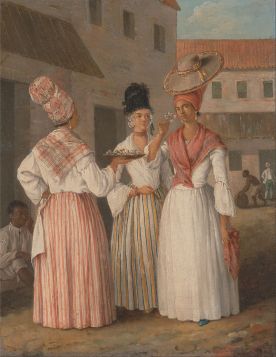
According to Ms Johnson, in an American South beset by slavery, headwraps were imposed on black women by slavemasters. This was in order to mark them out as inferior. Yes, they also protected delicate scalps from sun, sand, sweat and lice, but that’s beside the point… I need to pause for a moment here. Whew!
In Louisiana, the headwrap (or tignon) was also used as a social status signifier, or rather, to differentiate Afro-creole women form their white counterparts. Of course, my black sisters turned it around and decorated these tignons. Because slayage is not a new concept, fam. To read more on this history, please read that article here.
The 60s came with their Black Consciousness movements, and our sisters took that headwrap one step further: as a symbol of pride in one’s heritage. After that, the neo-soul movement of the 90s, with the India.Aries and Erykah Badus, pushed headwraps back into our everyday conversations and wardrobes.
Meanwhile in Africa, I suppose that head wraps were historically signifiers of marital status or wealth. This I base on the opinions of various writers on the internets, who are more knowledgeable than I. In Satafrika, a bride, once she is accepted into the groom’s family, is often given a head covering. And thus, that arduous journey of kotizaring (being a makoti) begins. This is across the cultures. Except the Afrikaans and English cultures. Probably not in the Indian and Coloured communities, either. I must find out.
Lastly, in the Bible, Paul admonishes women in the early Church to cover their heads in public worship (1 Corinthians 11:2-16). This is the most obvious basis of some churches still requiring women to cover their heads. (Disclaimer: This particular debate is quite a hot one in some churches; I’m not trying to mine its depths in this short post.)
Nowadays, I reckon the surge of interest in headwraps amongst the Instagram set has more to do with fashion. It doesn’t hurt that an expertly tied headwrap resembles a crown. It’s interesting to know that a rich heritage lies behind this humble piece of cloth, though. Next time I wear my headwrap, probably tomorrow, I will think of the women who flipped the tignon from a symbol of segregation, to a symbol of regal style.
How about you? With which headwrap-wearing reason do you resonate? Let a sister know. Until then, stay woke.
Copyright reserved Gugulethu Mhlanga 2018


 The Treasure Chest Blog
Leave a reply to Simple star Cancel reply