
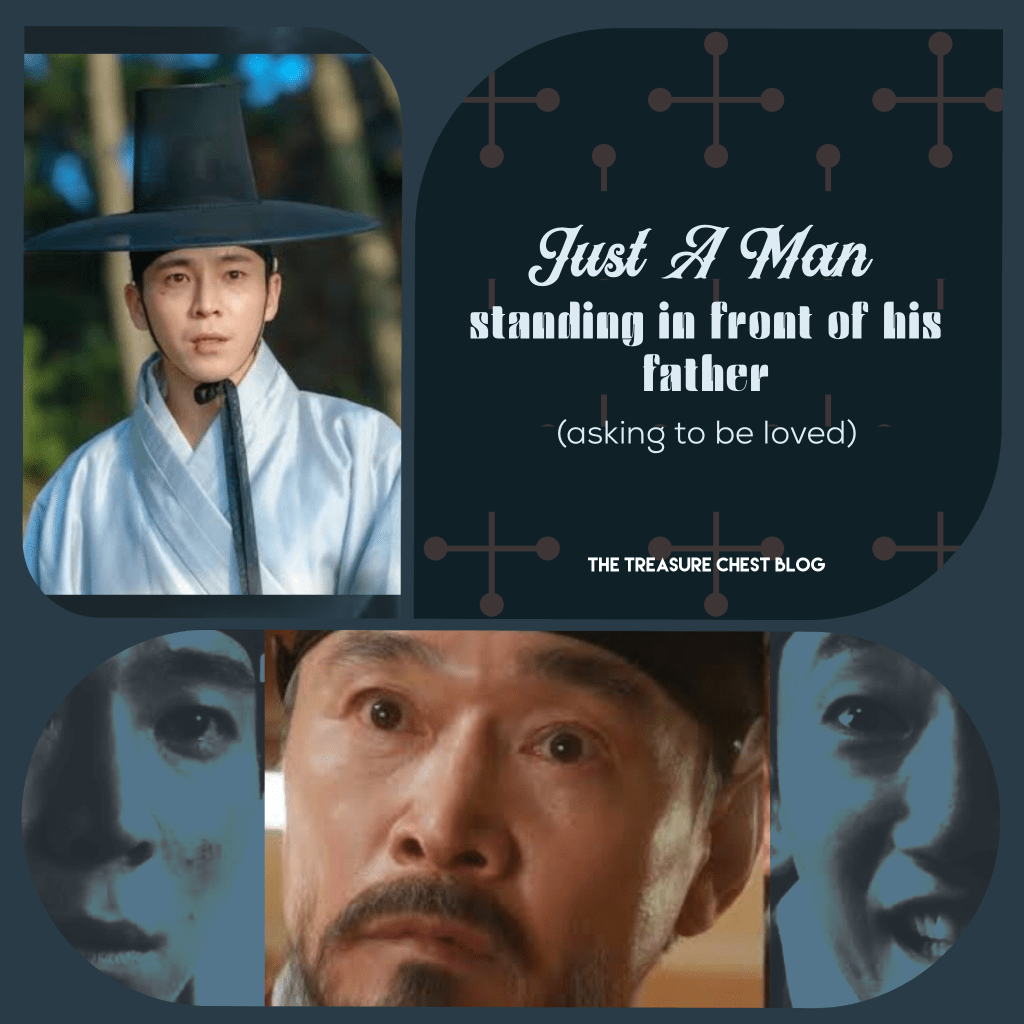
Starring one of my Mkhwenyis-in-rotation Ok Taecyeon (aka Babo[1] aka Mkhwenyi number 3), Secret Royal Inspector and Joy is a 2021 tvN K-drama, with a surprising emotional centre that had me in my feels, mourning with a character I never expected. That sounded cryptic, did it not? An explanation is required, I gather.
First, a synopsis.
Secret Royal Inspector and Joy is a sageuk[2] comedy set in the Joseon-era Korea. Ra Yi-Eon (Babo) is a not-so-closet foodie, who accidentally excels at passing the State Exam (at his grandmother’s firm urging). Because of this, he is appointed as a government official, a responsibility that stands between him and his true gastronomical passion.
News arrives at headquarters (or the palace, if you prefer) that a Secret Royal Inspector investigating irregularities in grain tax collections in the remote Joseon province of Chungcheong, has been disappeared.
Ra Yi-Eon draws a literal short straw, and is dispatched to secretly (and royally) be the next Chungcheong inspector. Grudgingly, he and his 2 buddies/servants go forth. Kodwa bayazikhuza[3] by planning to incorporate a tour of local culinary delights, while conducting the barest of inspections and report writings. Contrary to their initial minimalist ‘plans’, however, they are soon caught up in a real investigation, as a number of people start turning up unalive, including the local magistrate Ra Yi-Eon had intended to question.
It is soon revealed that the misdemeanours of the local magistrates and other government officials are connected, occultly, to one man.
Enter The Nefarious: Chief State Councillor Park Seung. A supposed custodian of law and order, Park Seung is, in fact, bent on amassing wealth and power through illegal means (so far, so South African). His goal: to either be or to control the most powerful man in Joseon (the King). Park Seung has two sons, born on the same night. One, a legitimate heir; the other, illegitimate (and not an heir).
Pause. At some point, we have to discuss why the term ‘illegitimate’ is a prefix borne solely by the offspring. After all, Offspring made no decisions in being born; it was the sins of the father (Park Seung) that resulted in his existence. As I continue.
The boys grow up, as people do. Park Do Soo as a son of the house, with (presumed) wealth, education, comfort. Park Tae Seo as a servant, fully aware of his parentage, yet having none of the privilege of sonship.
Park Seung’s greed for money and power grow with the passing years, and along with it, the need for an indentured henchman who will do whatever is required to further his aims. The convenient answer is Park Tae Seo. As a slave of the house, Tae Seo is obligated to do the master’s bidding. Tae Seo’s longing for his father’s love and acceptance gives Park Seung an extra level of control over him. For good measure. Oh the places Park Seung can go!
And so, some seriously twisted household dynamics are set in place. On the partial acceptance of Park Seung, signified by the gift of a family crest-festooned hat strap, Park Tae Seo becomes the dirty hands of the family.
This is how we, the viewers, meet Tae Seo. Now bedecked in the gowns of the nobility, he executes the seedy plans of the pater familias. Yes, that includes silencing those who stand in their networks of illegal trading and weapons procurement (aka government officials of integrity). Including our Secret Royal Inspector’s predecessor. All for his father’s nod of approval. He is both cunning, and a terrifyingly efficient executor of the dirtier (read: more murderous) deeds required by the real mastermind, his father. In short, he is not a good man. As the story unfolds, however, Tae Seo is gradually revealed to be more multi-faceted than first impressions suggest. He becomes the wildcard emotional centre of this tale.
Initially, Park Tae Seo appears to relish his position as his father’s ‘trusted’ right hand. The problem with being the dirty hands of an operation, though, is that Park Tae Seo also gets all the blame when Park Seung’s nefarious plans are thwarted. Like when a ledger documenting all the underhanded dealings connected to the Park-network disappears. Not that I exactly expected Park Seung to be warm and fuzzy when met with the news that his empire is compromised, but I was not prepared for the first revelation of his abusive nature. Park Seung’s evil is manifested in episode 3.
The scene opens to Park Tae Seo and his friends, enjoying drinks in the middle of the day with a couple of kisaengs[4]. They may or may not have been discussing plans for Joseon domination[5]. Park Seung, having heard that the ledger is missing, storms the gathering, grabs Park Tae Seo, and, to put it politely, manhandles him. With a cowering Tae Seo kneeling of the ground, Park Seung proceeds to call him all kinds of filth.
And I quote:
Park Seung (PS): I was the fool for putting a punk like you to work, thinking you’d be useful… If I told you to steal something you shouldn’t have left even a trace of a breath behind. Thanks to you, the idiot that forgot to clean up after himself, rumours about a warehouse in the south being robbed are running rampant. It’ll be better if I bury you myself, don’t you agree?
Park Tae Seo (PTS): Father, I—Father, for you I did everything you asked me to do.
PS: I told you to do it with no loose ends! I heard a secret royal inspector was murdered, and the ledger is lost. The next inspector from Hongmungwan [inspectors’ office] will be after you now. Want to know what I think? I think it’ll be best if you take the fall for everything, let the inspector take you away, and disappear from the world.
*Tense moment of intense close-ups later*
PS: Tae-Seo-ya. [proceeds to beckon PTS to his bosom, with a term of endearment, no less]. Don’t disappoint your father. My son.
PTS: Yes, Father.
*END SCENE*
Yhooooo! That 3-minute scene! In that brief interchange, the longing and fear that drive Park Tae Seo’s own villainy are laid bare. We witness the previously terrifying Tae Seo’s eyes being fill with terror at his father’s verbal and physical abuse. In that moment, it is evident that Tae Seo’s sonship rests under the proverbial sword of Damocles, ready to be severed with any slight lapse in his dutifulness. (Note the keywords: punk, idiot, warm klap to the face, I should bury you myself, etcetera).
You may recognise Park Seung’s behaviour as an example of the punishment-reward mind games of which abusive types are fond. In true narcissist fashion, Park Seung often employs blazing and contemptuous criticism when addressing Park Tae Seo (or speaking of him with his favourite son, Do Soo), despite monetarily benefiting from the young man’s blood, sweat and tears. (Or, the blood, sweat and tears of Tae Seo’s victims. Yeeeaaah. It gets messy.)
The next time Tae Seo’s eyes are put to heart-wrenching cinematic use, is towards the end of episode 4. During a scuffle (read: Tae Seo tries to kill Ra Yi-Eon), Yi-Eon’s sword slices through Tae Seo’s treasured family-crest hat strap, destroying it. Wholly distracted from the swordfight with Ra Yi-Eon, a distraught Tae Seo desperately tries to piece together the token of his (conditional) acceptance as a son of the Park family.
Allow me yet another digression.
The camera work. Around Park Tae Seo. Tells an entire tale without words. The closeups of his face brilliantly juxtapose Tae Seo the villain, with Tae Seo the son. From his ‘evil-henchman’ introduction, to his more vulnerable moments as he receives his sire’s ‘acceptance’ (that hat strap, y’all), and lastly his humiliation at same sire’s hands, the director and director of photography weave a humanising tale around a man who does despicable things. They (directors, writers and actor) build depth into a character we should loathe.
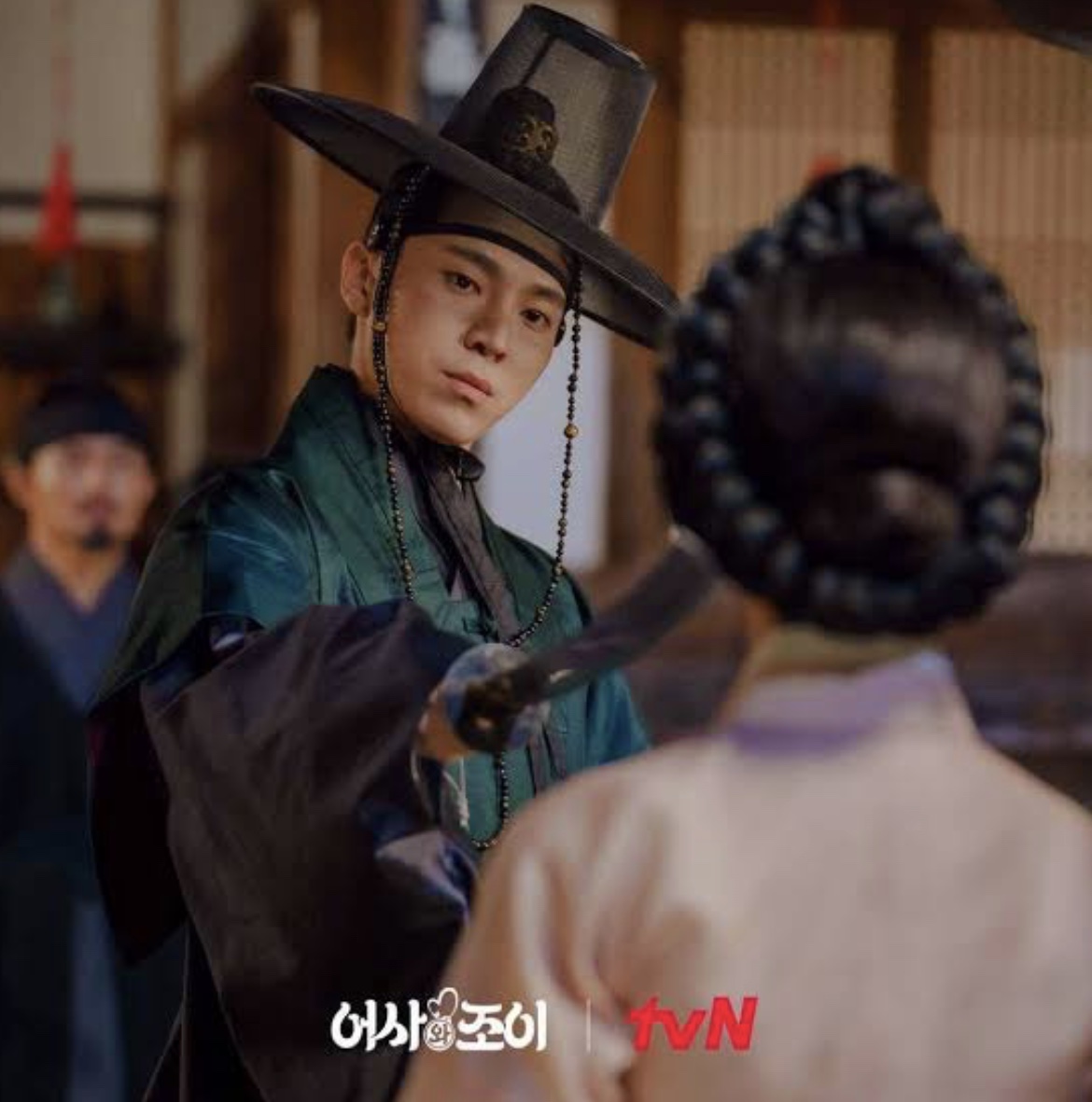
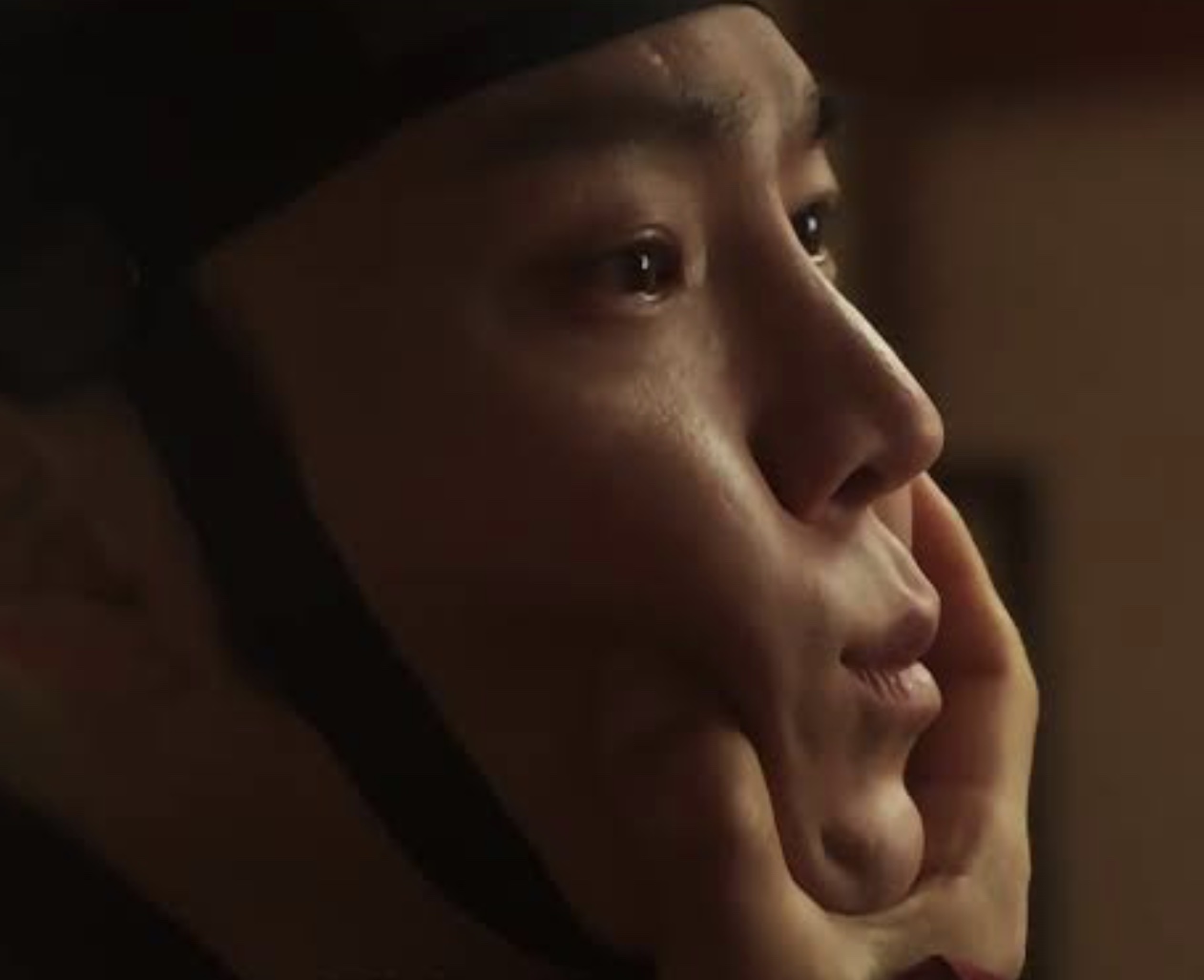
What comes into clear focus is that underneath the terrifying façade is a young man, waiting for acceptance from his father, willing to go to any lengths to obtain it. Park Tae Seo’s essence is that of a charismatic character. He is savvy, industrious and surprisingly loyal. When he and his friends are arrested on the evidence of their crimes later in the story, he tries to ensure that only he takes the blame, so that his friends may escape death and go on to live their best lives. Had the circumstances of his birth been different, he could have been an effective leader, perhaps even a friend of the main protagonist. But because of this core wound, this fatherlessness, and the example of a self-interested sire, he followed the way of the cunning and ruthless. A path that led to destruction. He was a true product of fatherlessness.
Now, traditionally, fatherlessness has been defined as the state of having no father because he is dead or absent from the home. Additionally, it can be defined as the lack of an engaged father.
Sociological researchers have shown, through various studies in recent decades, the effects of fatherlessness on individuals, and communities. These include greater likelihoods of children of absent fathers living in poverty and/or exhibiting behavioural problems.[6]
Critiques of this traditional definition of fatherlessness note that these definitions and sequelae tend to unfairly represent socio-economic constraints faced by many. Sometimes fathers are absent from the home, not because they wish to be, but because economic opportunities are far from home-base. (That is a discussion worthy of its own essay. This is an unhealed wound in South Africa, and we are still paying the price. Thanks, Apartheid.)
Also, one gets the idea that the (very American) researchers may not have controlled for the (very American) policies that maintain the foundation of distributive injustice in America today. But I digress.
Fathers matter.
Park Tae Seo, however, demonstrates a different slant on the problem of fatherlessness: a malevolently present father. A father who is the wrong kind of model for both of his sons.
Park Tae Seo’s sire was yet alive, and rich on top of it all. He even grudgingly acknowledged Tae Seo. But Park Tae Seo lacked a father, an engaged father, in Park Seung. He spent the rest of his life with deep father-hunger[7].
As his relationship with the ‘legitimate’ son demonstrated, Park Seung did know (somewhat) how to be a doting and engaged father towards Park Do Soo. One scene shows Park Seung in conference with an architect, lovingly designing his heir’s future home. He protects Do Soo, not wanting that he should tarnish his hands with even a whiff of the corruption he is more than willing to heap upon Park Tae Seo. In turn, Park Do Soo has never had to work a day in his life for his father’s approval. But. For all his father’s doting, Do Soo turns out to be an entitled, cruel, opium-addicted man[8], who hates the ‘illegitimate’ son with Cain-like[9] intensity.
For all the unexpected pity that I experienced for Park Tae Seo, the son who had experienced the involved parenting of Park Seung did not fare any better than the neglected one. In fact, one could argue that, in some weird way, it seems that the lack of his father’s attention preserved Tae Seo’s more redeemable qualities.
Absent fathers are a problem. But malevolently present, broken fathers…
Bazakes, the subject of fathers and their children often evokes strong emotions. See, God the Father has a beautiful design in mind for the family, and for the father’s place in that family. A good father should love, instruct, disciple and discipline his children to the best of his ability, and be a tangible demonstration of God’s love for us His children[10]. But, you know, humans will human, and that design gets distorted.
And so, for too many of us, the emotions dredged up when speaking of fathers and children, lean toward the negative. In the spirit of full disclosure, I am the product of a ‘traditional’[11] nuclear family[12]. I do not have the experience of either a fatherless home during my formative years, or worse, a malevolent father in the house. Disclaimer stated, I cannot speak on the reality of an absent or malevolently present father from my personal experience. If that has been your lived experience, dear reader, I mourn with you. That is not how God ever intended fathers to be, yet here some of us children are, suffering the consequences of being ill-fathered.
Perhaps, the term father-hunger strikes a chord with you. Maybe it has been a long time since you allowed yourself to admit that you used to, and perhaps still do, yearn for your father’s love, attention, and approval. I think it is something with which we all will reckon at some point, some more than others. We consciously and unconsciously work to get our fathers’ attention (boys and girls alike), and are wounded when we don’t. Because sometimes we won’t. Even the most present father is still human, and may not be able to meet our deepest desire for connection. It’s okay to admit that.
But God!
Bazakes, through faith in Christ Jesus, we have been made children of the living God. God’s plan for our salvation from the slavery of sin, through the death of Jesus on the cross and His resurrection, included our adoption as His children. And so,
“…because we are his children, God has sent the Spirit of His Son into our hearts, prompting us to call out, ‘Abba, Father’. Now you are no longer a slave but God’s own child. And since you are his child, God has made you His heir.”[13]
That’s a sonship that is inherited through faith in the finished work of Jesus on the cross. Not through performance, perfection, or endless tasks to demonstrate one’s filial loyalty. Faith alone. That is one of the (many) treasures of being accepted into the family of God, bazakes.
Whether or not we end up getting the father-hunger met by our biological fathers, we have God’s promise through His word, that we are adopted into His family, and He is willing and able to show us His goodness as Father.
Also, in His goodness, and through the work of the Holy Spirit in us who believe, God’s will is to return the hearts of fathers to their children, and the hearts of children to their fathers[14]. To mend broken families, and to heal broken hearts. And where that is not possible, He is the Father to the fatherless[15].
Now if that don’t make us shout in praise, I don’t know what will.
In closing, bazakes, I leave you with the words and prayer of the apostle Paul for the church:
“For this reason I kneel before the Father, from whom every family in heaven and on earth derives its name. I pray that out of His glorious riches He may strengthen you with power through His Spirit in your inner being, so that Christ may dwell in your hearts through faith. And I pray that you, being rooted and established in love, may have power, together with all the Lord’s holy people, to grasp how wide and long and high and deep is the love of Christ, and to know this love that surpasses knowledge—that you may be filled to the measure of all the fullness of God. Now to Him who is able to do immeasurably more than all we ask or imagine, according to His power that is at work within us, to Him be glory in the church and in Christ Jesus throughout all generations, for ever and ever.[16]”
Amen, and amen.
EPILOGUE aka SPOILERS
Sadly, Park Tae Seo never did feel the warmth of his father’s affection.
SPOILERS AHEAD. Consider yourself duly warned.
As Ra Yi-Eon’s investigation continues (Go Babo! Go Babo!), Park Seung’s network is exposed for the corrupt cesspool it is. We’re talking embezzlement, cultivation of the poisonous plant aconite, murder (x multiple). However, because of the setup of said network, the evidence against Park Tae Seo is overwhelming, while Park Seung is only circumstantially implicated. Oh, and Park Do Soo is rightly implicated for the murder of the Minister of Maritime Transport.
On the other side, Park Do Soo and Park Seung discover the source of Park Tae Seo’s independent wealth: silver mining. Park Tae Seo, being his pappy’s offspring and possessing a frightening acumen, saw an opportunity to amass wealth through silver, with the aim of using it in order to purchase weapons. Since this was an independent move that Park Seung never authorised his slave—my bad, his son—to make, he starts being suspicious of Park Tae Seo’s cunning. Which is exactly what the jealous/petty/entitled Park Do Soo wants. (Also, to claim that wealth for himself). This leads to the irreparable fracture in the faux-trust relationship between father and slave/offspring.
When the Park boys & co. are brought into the palace for interrogation, Park Seung orchestrates it that Do Soo is sentenced to exile (commuted to a fine), while Tae Seo is sentenced to death by beheading[17].
Tae Seo escapes his beheading, injured but yet alive. Aided by his friends, he is guided to a safe house of sorts. There he meets his mother, formerly a servant in the Park household, who tends his injuries. SPOILER. Overtaken with guilt at all that Tae Seo has suffered, she reveals that Park Tae Seo is actually the son born to the legal wife; he is the real heir. She, the servant woman, had switched the boys at birth, so that her ‘low-borne’ son would have the privilege of legitimacy.
He should have been the beloved son the whole time! But fam, you, me and Tae Seo know that it no longer makes a difference, not with the contempt he has faced his entire life, being treated as no better than a hunting dog: fit only to perform a task, and to be put down when no longer useful. I mean, his father watched as he was led to his execution, and was RELIEVED that he could finally get rid of Tae Seo. Imagine, fam!
Furthermore, Tae Seo knows he must pay for his sins, because despite his background, and knowing why he was so desperate to please his father, it WAS his hand that took those countless lives. Also, Ra Yi-Eon found his hiding place and persuaded him strongly to go back to Hanyang, sooo really, he had no other choice.
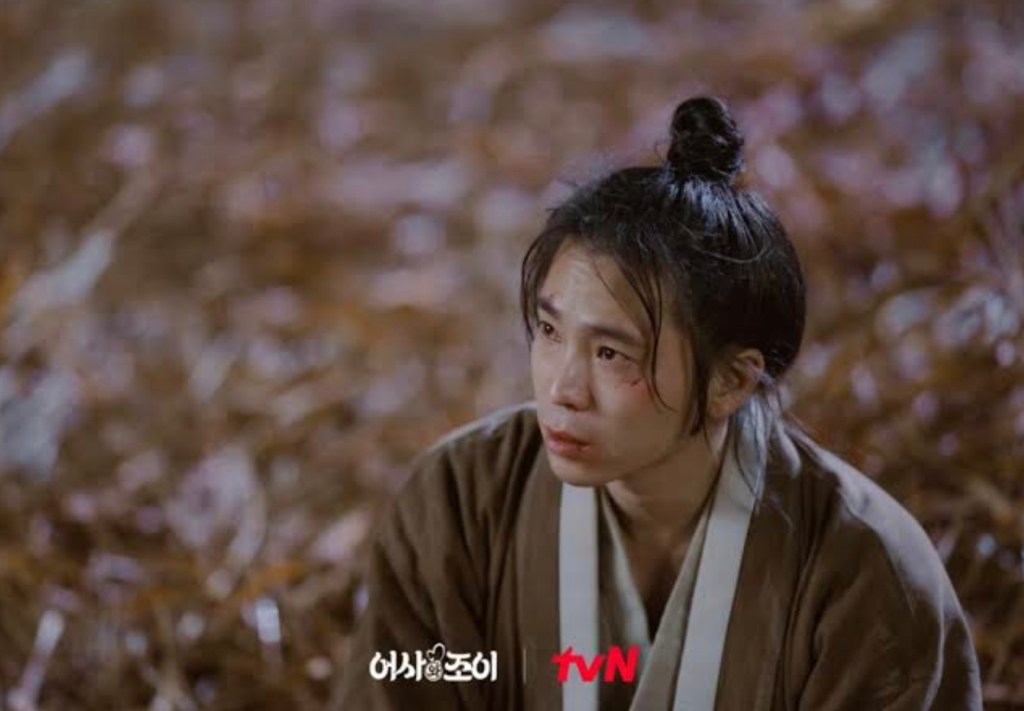
Thus, he and his 2 friends make their way to port, to travel to the capital and turn themselves in. Alas, they are ambushed on the beach, before they reach their ride. Do Soo jumps out of the bushes and viciously stabs Tae Seo, with their father looking on. As Tae Seo collapses, Park Seung puts his arm around Do Soo, because, “Aigoo, let’s go get something to eat, my poor baby.” [insert eye roll] The two walk off into the sunset, not even glancing back at Tae Seo. His friends are similarly unalived. A dying Tae Seo watches as his ‘family’ walks off, alive, and wonders in his final moments, what it was he had been fighting so hard to achieve. And then the kicker: “I want to believe that when he (Park Seung) smiled at me, he meant it.”
Yhooooooooo! Feels!!!!! Honestly, give that man (Lee Jae Kyun aka Park Tae Seo) a Bell’s. It’s not as if we did not anticipate that Tae Seo would pay the ultimate price for his crimes. But the work that Lee Jae Kyun-ssi put in, y’all! He ensured that when Tae Seo met his end in an unjust way, he reached into our thoracic cavities and wrenched our hearts out in the process. MVP, nje.
Eventually, Park Seung and Park Do Soo face justice. Because: Babo (heart emoji), and his relentless quest for justice. They are sentenced to hard labour, in exile, and far apart from each other. The end of that toxic/enabling/infantilising situation. Park Tae Seo’s ‘mother’ (because our Tae Seo still recognised and respected her as his mother until his last breath, even knowing the truth) is finally able to atone for her sins and inform the incarcerated Park Seung that them two murdered the legitimate heir: Park Tae Seo. Too little too late.
Park Seung is a trash father. Don’t be like Park Seung.
Anyways, what were your thoughts on Secret Royal Inspector and Joy? Let me know in the comments. Be blessed.
(C) Copyright reserved. Gugulethu Mhlanga 2022.
Featured image edit by Gugulethu Mhlanga. Copyright reserved 2022.
Original drama stills property of tvN.
[1] Babo in the isiZulu sense, as in Bab’omncane; but also Babo in the sense of his unhinged character in Vincenzo.
[2] Sageuk is a genre of K-drama; namely, an historical drama
[3] Translation: They console themselves
[4] Courtesans
[5] Shades of Pinky and the Brain
[6] Research conducted by the National Fatherhood Initiative of the United Sates, children growing up in fatherless households faced:
- A greater risk of poverty
- A greater likelihood of exhibiting behavioural problems
- A higher risk of infant mortality
They also were:
- More likely to go to prison or commit a crime (the unfathered, not the absent father)
- More likely to become pregnant as a teen
- More likely to face abuse and neglect
- More likely to abuse drugs and alcohol
- More likely to suffer from obesity
- More likely to drop out of school
[7] Father hunger is defined as “A lack of sufficient fathering due to death, emotional unavailability or desertion and the child’s yearning for this fathering, often throughout their life span.” (Courtesy of the Kentucky School of Alcohol and Drug Studies)
[8] Do Soo gives off immature, not working with a full set of cutlery vibes.
[9] Eish. Cain and Abel. Genesis 4:1-16
[10] By “good” I mean not one who is perfect, but one who perseveres in trying and doing his best.
[11] Traditional as defined by sociologists: father, mother, children.
[12] And a veeeeeery large extended family #blessed
[13] Galatians 4:6-7
[14] Malachi 4:6
[15] Psalm 68:5
[16] Ephesians 3:14-21
[17] Turns out that Park Seung really did have control of the most powerful man in Joseon. Remember that aconite that Tae Seo cultivated for Park Seung? That aconite was used to poison the Crown Prince, Ra Yi-Eon’s best friend, a murder that was carried out by Park Tae Seo on behalf of Park Seung. And who authorised the Crown Prince’s murder? The King, the Crown Prince’s father!!!! Because of jealousy!!!!!!! Thus, Park Seung is able to blackmail his way out of death for himself and Do Soo. Also, ungathi they were competing for worst father of all time.

 The Treasure Chest Blog
Leave a reply to Malaika Cancel reply